Capabilities
Aviation & Airside Safety
Precision lighting for aviation operations
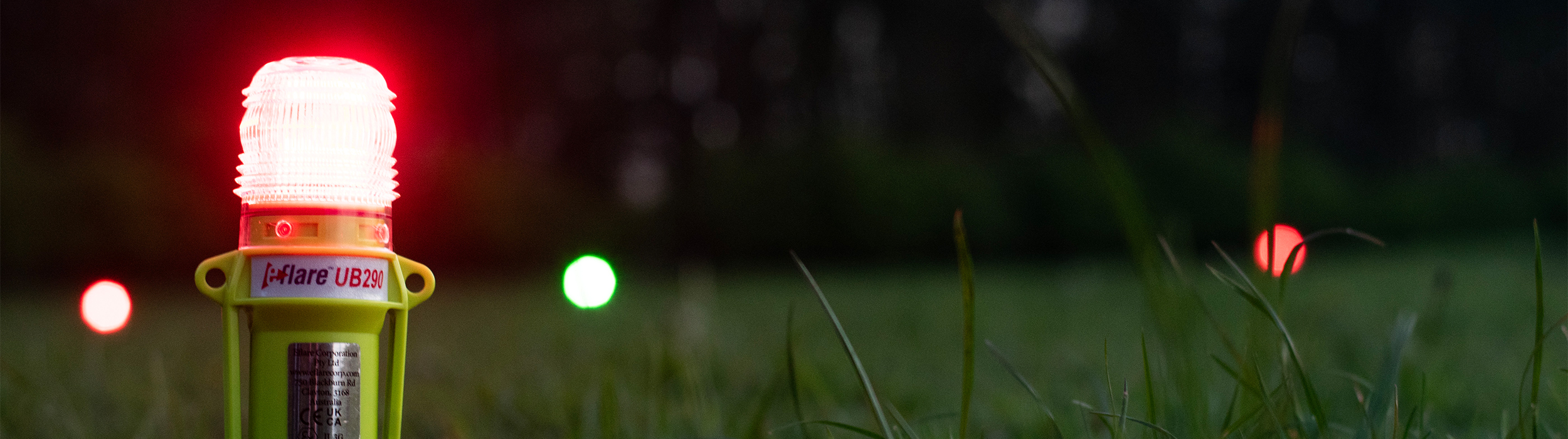
Eflare’s portable LED beacons are robust and able to meet the safety and visibility requirements of the aviation industry.
With a bespoke aviation base and over 40 hours of reliable lighting on a single set of batteries, they ensure enhanced visibility for aircraft operations, ground crews, and emergency scenarios.
Precision Illumination
Engineered optics provide clear 360° visibility for accurate runway and helipad guidance in all lighting conditions.
Rapid Field Deployment
Compact, tool-free setup enables crews to establish safe landing zones within seconds during critical operations.
Reliable Performance
Designed to withstand vibration, rotor wash, and harsh weather for dependable visibility on the airfield.
Applications
- Temporary/Emergency Runway
- Helicopter Landing Zone
- Drone Landing Zone
- Airport Maintenance
Emergency Landing Zone Kit
Designed for rapid deployment and reliability, the Eflare Emergency Landing Zone Kit ensures that pilots can land safely and accurately when it matters most.
- Deploys quickly, compact and versatile
- Facilitates precise landing guidance from afar
- Stable under rotor wash, no anchors needed
- Ensures safer and more organised ground crew operations
Case Studies
Discover how Eflare LED safety beacons are used worldwide to enhance visibility, improve safety, and deliver reliable performance across diverse real-world applications.
Royal Flying Doctor Service
Eflare supplies temporary runway kits to remote bush airstrips to create a safe and highly visible runway for the Royal Flying Doctor Service.
Why Choose Eflare
Born from decades of field-proven safety innovation, Eflare lights have earned the trust of aviation professionals worldwide. Designed for absolute reliability in demanding environments, each beacon delivers high-intensity visibility.
Lightweight, intrinsically safe, and built to withstand rotor wash and harsh weather, Eflare beacons define precision lighting for runways, helipads, and emergency landing zones, continuing a legacy of engineering that keeps crews, pilots, and passengers safe.